
Placing the burden on people to be "resilient" to devastating weather events isn't fair when the climate game is stacked against us.
After being set to hit near Townsville, ex-Tropical Cyclone Koji turned suddenly and landed in the Whitsundays and Mackay, before sweeping through inland areas like Clermont - catching our coastal and inland towns by surprise and unprepared. 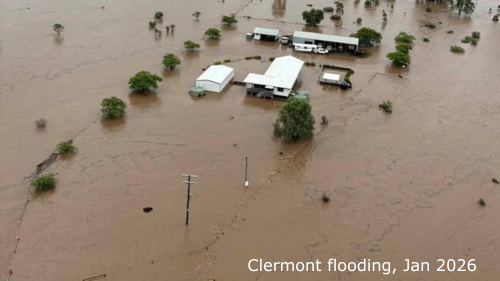
In some areas, nearly a quarter of a year’s total rainfall fell in a single day, with some inland locations receiving 400–600 mm in 48 hours. These aren’t spaced decades apart anymore — they’re happening within years, sometimes months.
This aligns with climate science predictions: warmer atmospheres hold more moisture, producing heavier rainfall. When these records keep breaking, “rare” events are becoming routine.
On the Today show this week, the LNP Queensland State Premier, David Crisafulli, said that there is more heavy rain coming, but "...Queensland knows how to handle that. We are a very disaster-resilient state."
This is a horribly minimising comment about the ongoing widespread destruction and cost to people and their communities from weather events.
Handling floods and surviving them is not the same as being prepared for them.
Saying Queenslanders are “resilient” risks letting governments off the hook while people bear the costs of climate change: destroyed homes, drowned livestock, flooded schools, and ruined livelihoods.
The impacts Queenslanders have "had to handle" from Koji are:
- Clermont going underwater and people being evacuated with helicopters in the town's worst flooding in 110 years
- 15,000 Queenslanders losing power
- People at the top of the Eungella range cut off from food and medical supplies, as their roads were washed away
- 40,000 cattle drowned in flooded grazing lands in northern Queensland
The double face of the State Government's disaster recovery
Queenslanders are strong-hearted and help each other out when emergencies strike. But expecting us to pick up time and again to cope with increasing climate events, while Governments continue to support climate change-causing industries like fossil fuels, and not build the resilient infrastructure year after year, is unfair and immoral.
It is hypocritical of Crisafulli to say people come first when it comes to storm and flood recovery, while his political party take massive donations from and supports the interests of fossil fuel companies that contribute to climate change and worsening weather in the first place.
Which side are our leaders on? The interests of people and communities, or mega profit-making fossil fuel companies and industries that fuel the crises?
Lessons Unlearned
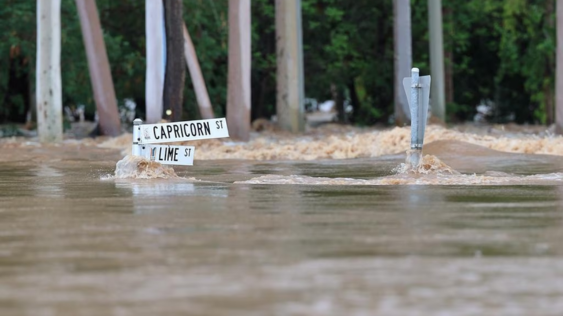
Despite repeated flooding, our preparation for extreme weather in our region remains dangerously inadequate:
- Mackay has a population of over 127,000, but only one public Cyclone Shelter - with limited space - for a Category 3 cyclone and above
-
Drainage and flood mitigation systems are outdated, designed for historical rainfall rather than modern extremes.
-
Urban expansion and development continues into flood-prone areas
- Destruction of areas that help protect us from floods & storm surges, like mangroves, continues, like the planned Mackay Port Access Road.
-
Flood mapping is often out of date, and nature-based mitigation projects lag far behind the speed of climate change.
Communities are indeed resilient, but resilience is being asked of individuals while systemic solutions lag. Sandbags, pumps, and evacuation plans can only go so far when infrastructure and policy don’t match the scale of the problem.
All this infrastructure needs money, which could easily be funded if coal royalties remain in place and are properly invested back to the regions.
Making polluters pay
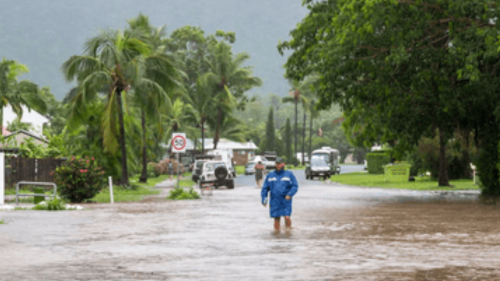
Taxpayer-funded disaster relief payouts are already rolling out - as they should. But these huge costs continue to rise. As year after year these climatic events occur, the cost of emergency services (police, ambulance and fire), repair of roads and infrastructure falls back to the taxpayer. Meanwhile, coal and gas companies that contribute to these climate risks and are making earning millions - or billions - in profit from our regions, continue to cry poor and negotiate to reduce or postpone paying royalties.
Last year, we doorknocked hundreds of Central Queenslanders who overwhelmingly agreed that:
- Our Government should do more to make coal and gas polluters cut climate pollution and protect our communities from worsening impacts (72.2% agree)
- Mining companies should put more of their huge profits back into regional Queensland communities (90% agree)
Insurance: Paying More for Less or None at All
As floods become more frequent, insurance is becoming less certain for Queenslanders. Northern and Central communities are facing skyrocketing insurance premiums, with some Queensland households and businesses being refused coverage entirely. In 2023/24, flood-related claims in Queensland totalled $2.2 billion - not including Koji’s damage.
The consequence: communities absorb repeated losses, even as disaster relief is funded by taxpayers. Resilience becomes a burden on ordinary people rather than a reflection of effective systems.
So what can be done?
- A real, solid plan for a climate-safe future for Queensland's communities and economy, diversifying away from fossil fuels
- Properly funding the coastal resilience program, QCoast2100, so that all Queensland local councils have funding to build flood and storm resilient infrastructure and systems to protect communities

- Rebuild roads higher and above flood lines, letting food and medical supplies continue
- Protect natural solutions like mangroves and trees that reduce storm surges, landslides, and protect topsoil from being washed away
- Queensland coal royalties stay as they are, with more royalties coming back into our regions to compensate taxpayers for funding disaster relief payouts, repairing climate destruction and preparing our communities for more disastrous weather events like floods, storms and heat
The Bottom Line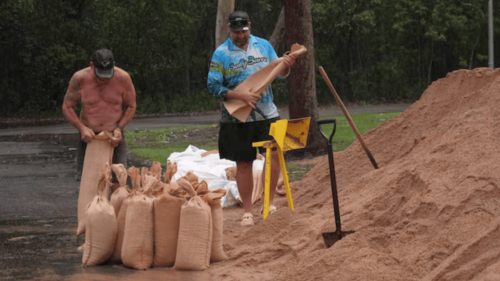
Ex‑Tropical Cyclone Koji should not be treated as an isolated event. It’s part of a pattern — one that exposes gaps in preparation, inequities in who bears the costs, and the risks of continuing business as usual.
Communities in Queensland are resilient, yes. But it does not compensate for a lack of investment in infrastructure, proper planning, or climate-adapted policy. Resilience in this context is not an achievement; it’s a survival mechanism, borne at the cost of destroyed homes, drowned cattle, and taxpayer-funded recovery programs.
If Queenslanders are truly to become resilient, it cannot be only a slogan. It must be backed by systemic investment, robust planning for climate change, and accountability for those whose activities amplify the risk of disasters. Otherwise, the so-called “resilience” we are applauded for is just an excuse for repeated failure.